
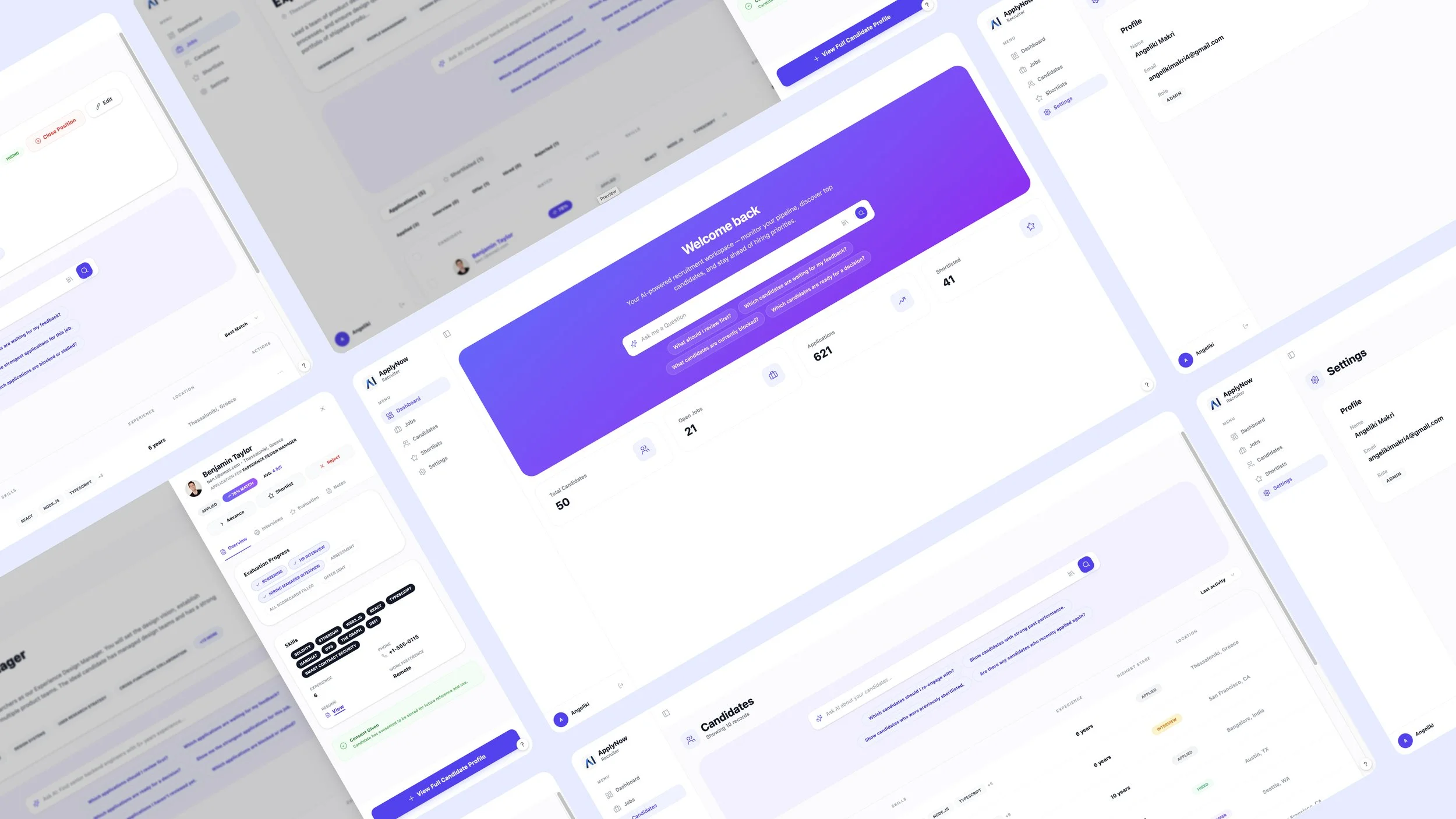
ApplyNow AI
ApplyNow is an AI-powered recruitment platform designed to help companies evaluate and manage candidates more efficiently. I led the end-to-end product design, including research, user flows, and high-fidelity prototypes in Lovable and Figma, delivering a complete, production-ready UX/UI solution.

DESIGN LAB COURSE PLATFORM
Project Overview
THE TASK
The ApplyNow is a new recruitment platform (desktop only app), a simple yet powerful tool that allows HR departments to start their recruitment campaigns, track applications, and evaluate applicants’ effortless, whereas keeping the resumes for future references.
Your task is divided into two sections and we would like you to provide the following
deliverables:
- User flow/ research
- High fidelity designs for desktop of the following pages (Sketch or Figma file)
Candidates List
A list with all candidates that applied to a job opening of the company that uses the new platform. Besides the name of the candidate, other essential information could be shown. Moreover filtering and search functionality should be available.
Candidates Info Page
Candidate’s info page, where all related information is displayed.
ROLE
UX, UI Designer
TIME
1 week
TOOLS
Figma Make, Figma, Lovable, Miro, ChatGPT
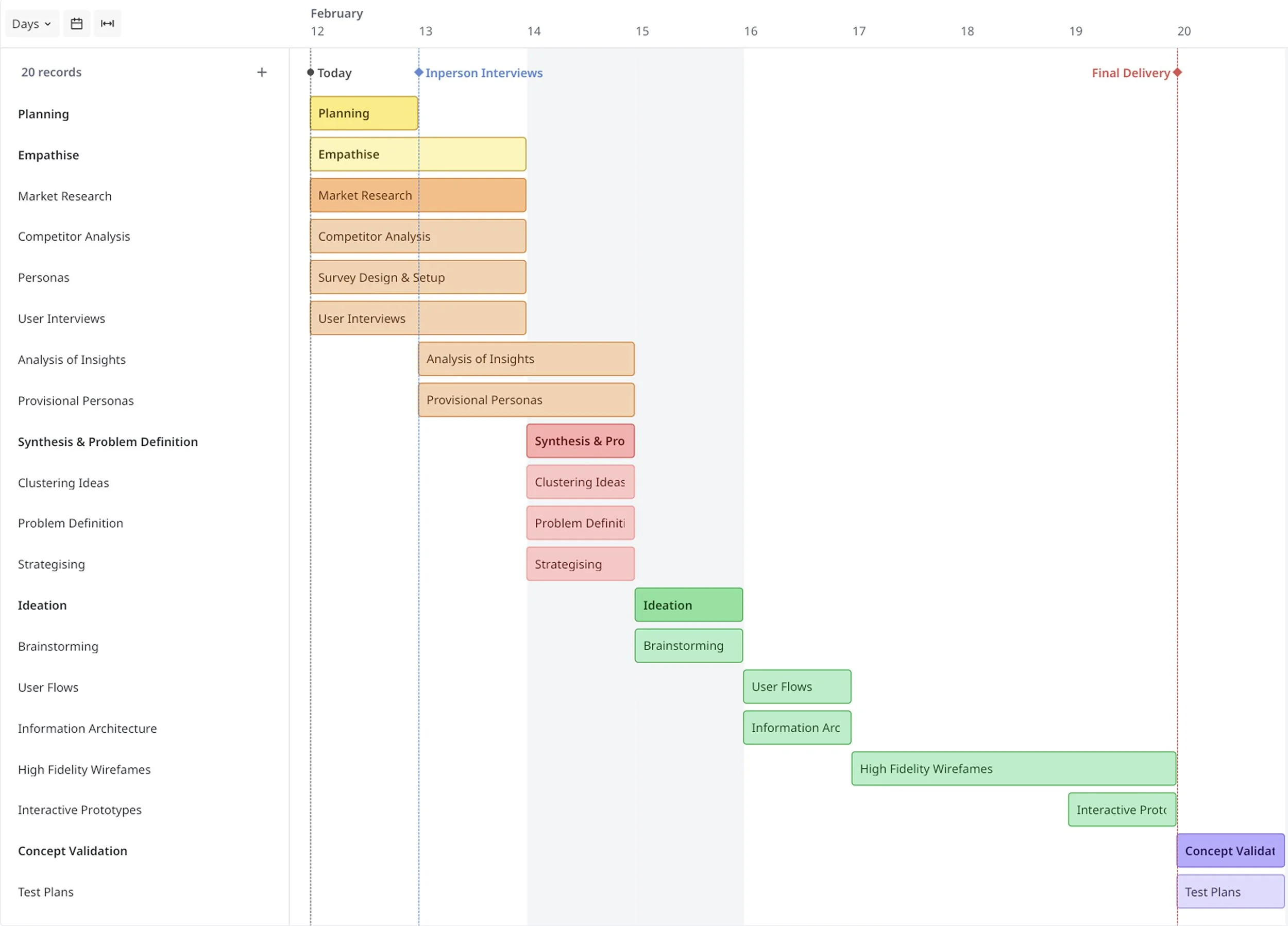
Planning
Created a planning timeline outlining key design phases, milestones, and deliverables, ensuring structured execution, clear priorities, and alignment between research, design, and prototyping activities.
Empathize
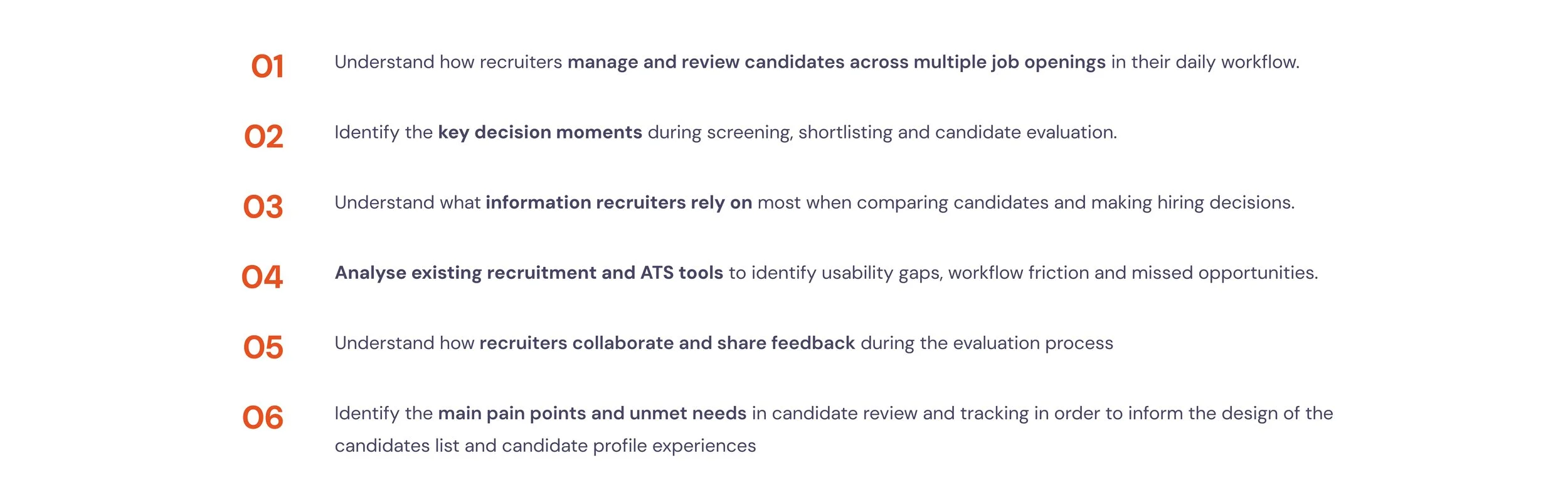
In preparation to start this project, I defined clear research goals to guide an assumption-driven discovery approach and inform the design of the core recruiter experience.
Research Goals
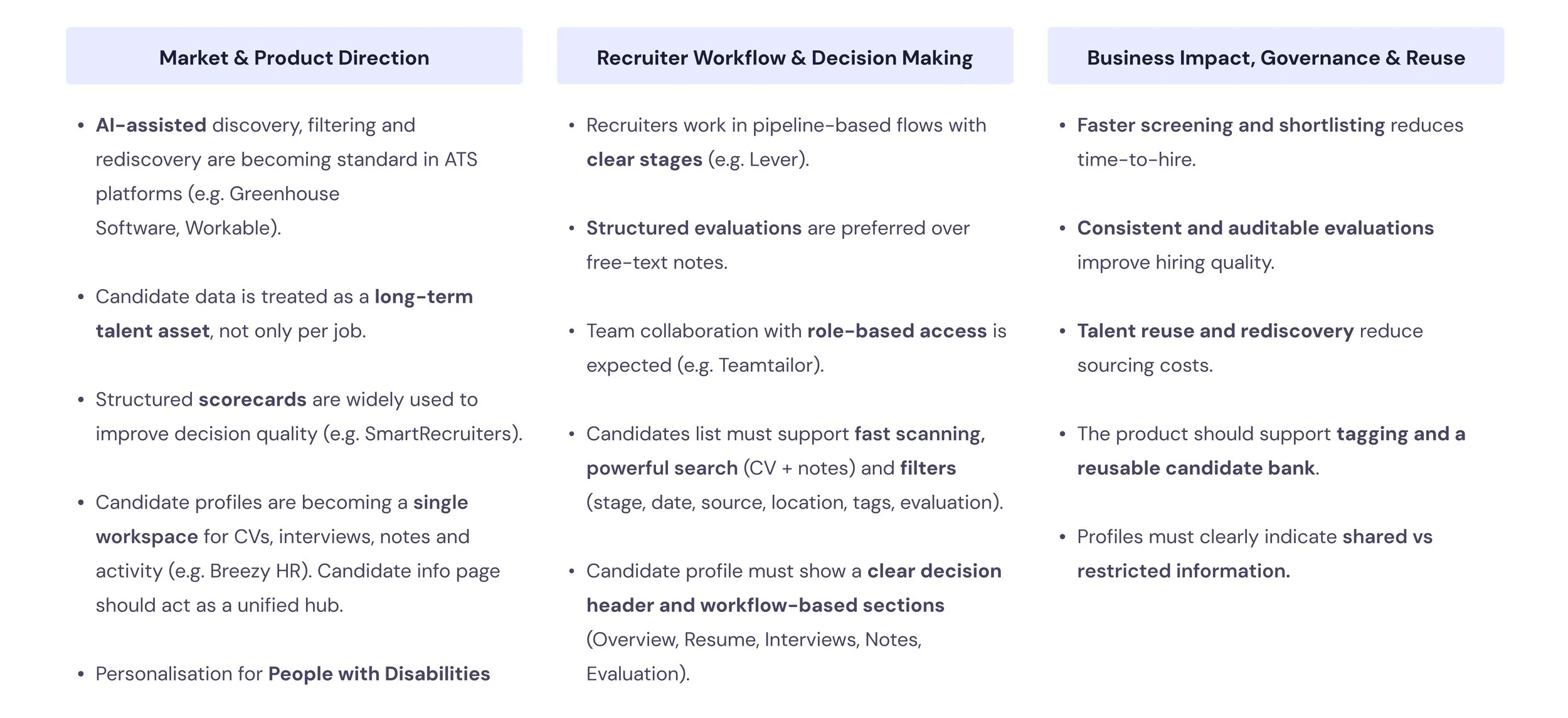
Market Research
Conducted a market research exercise to analyse existing recruitment platforms, identify industry gaps, and benchmark features, UX patterns, and AI capabilities. The insights helped define product positioning, prioritise features, and inform the platform’s information architecture and user experience strategy.
Competitive Analysis
Conducted a competitive analysis to evaluate leading recruitment platforms, assessing their strengths, weaknesses, feature sets, and user experience. The findings informed differentiation opportunities, feature prioritisation, and helped shape a more efficient and intuitive platform design.
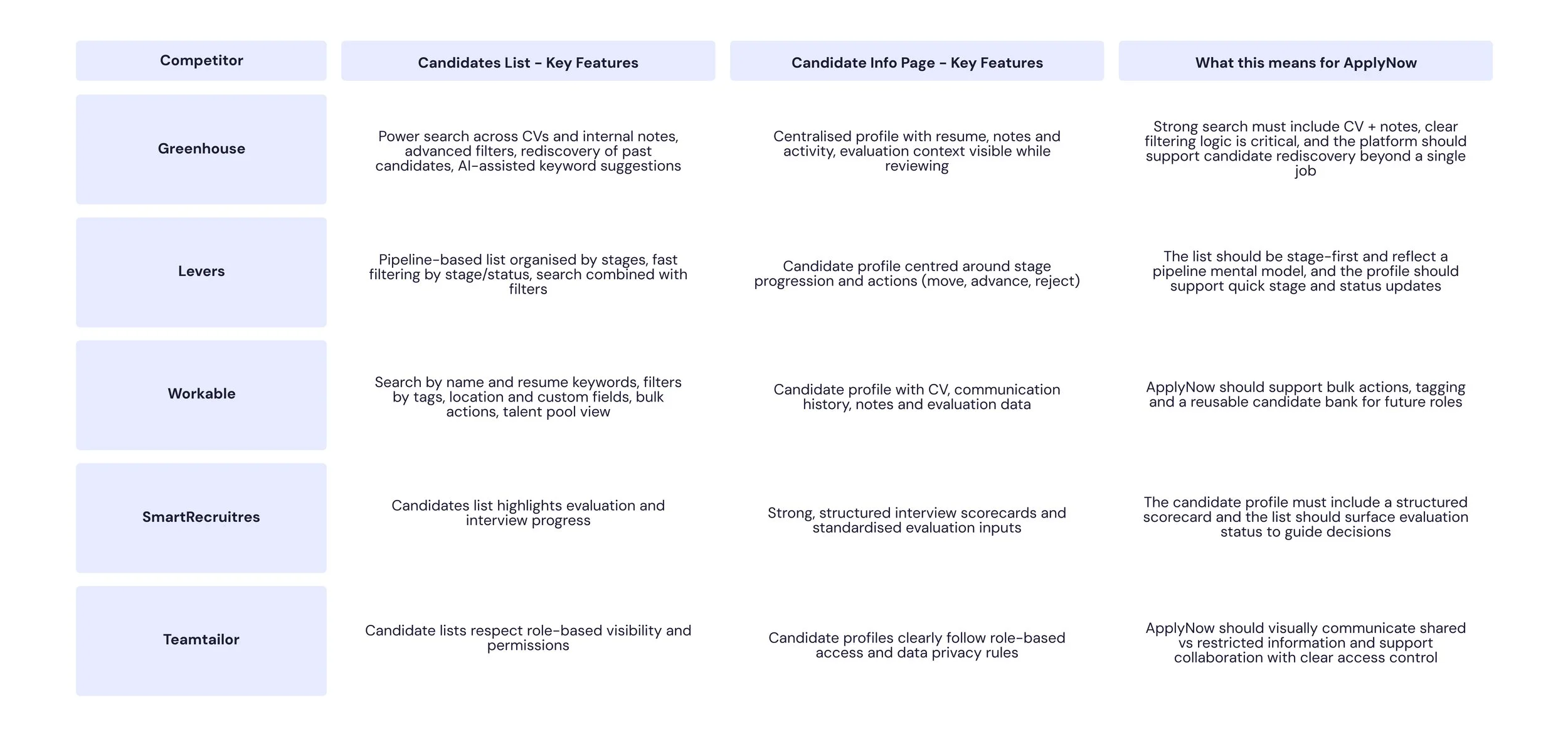
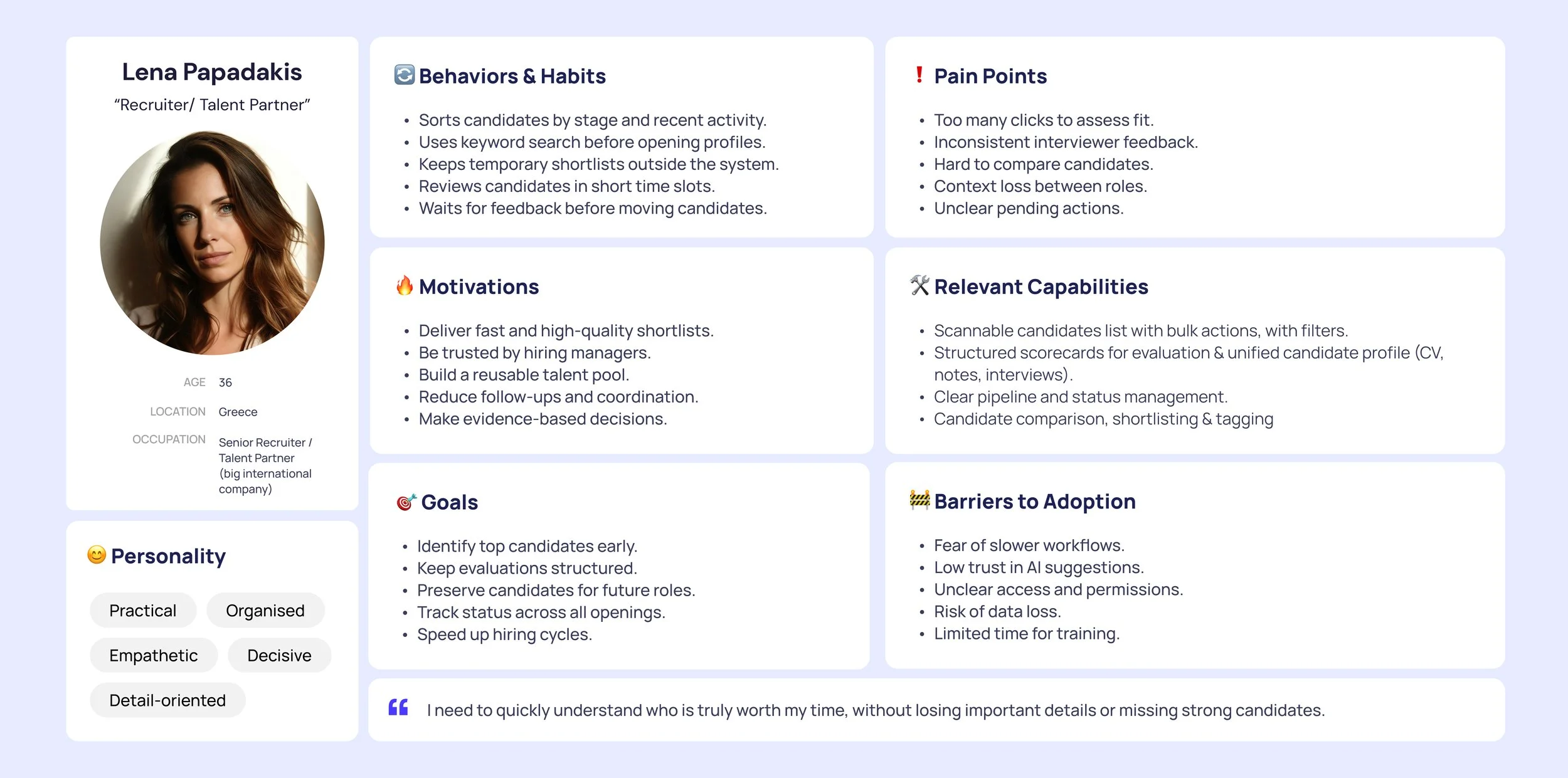
Persona
Defined the primary persona based on research insights to represent the platform’s main target user, including their goals, behaviours, needs, and pain points. This ensured design decisions remained user-centred and aligned with real hiring workflows and priorities.
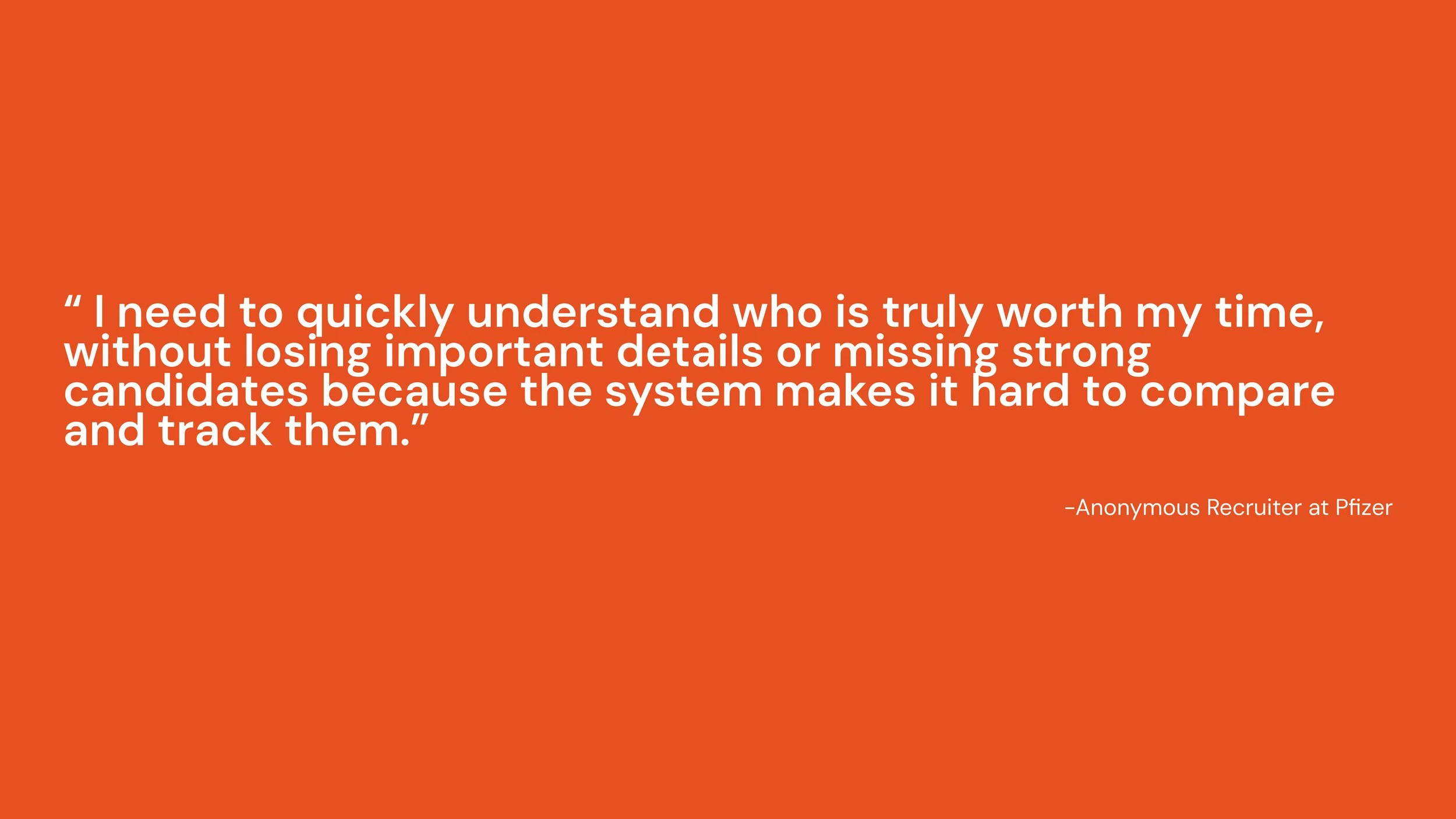
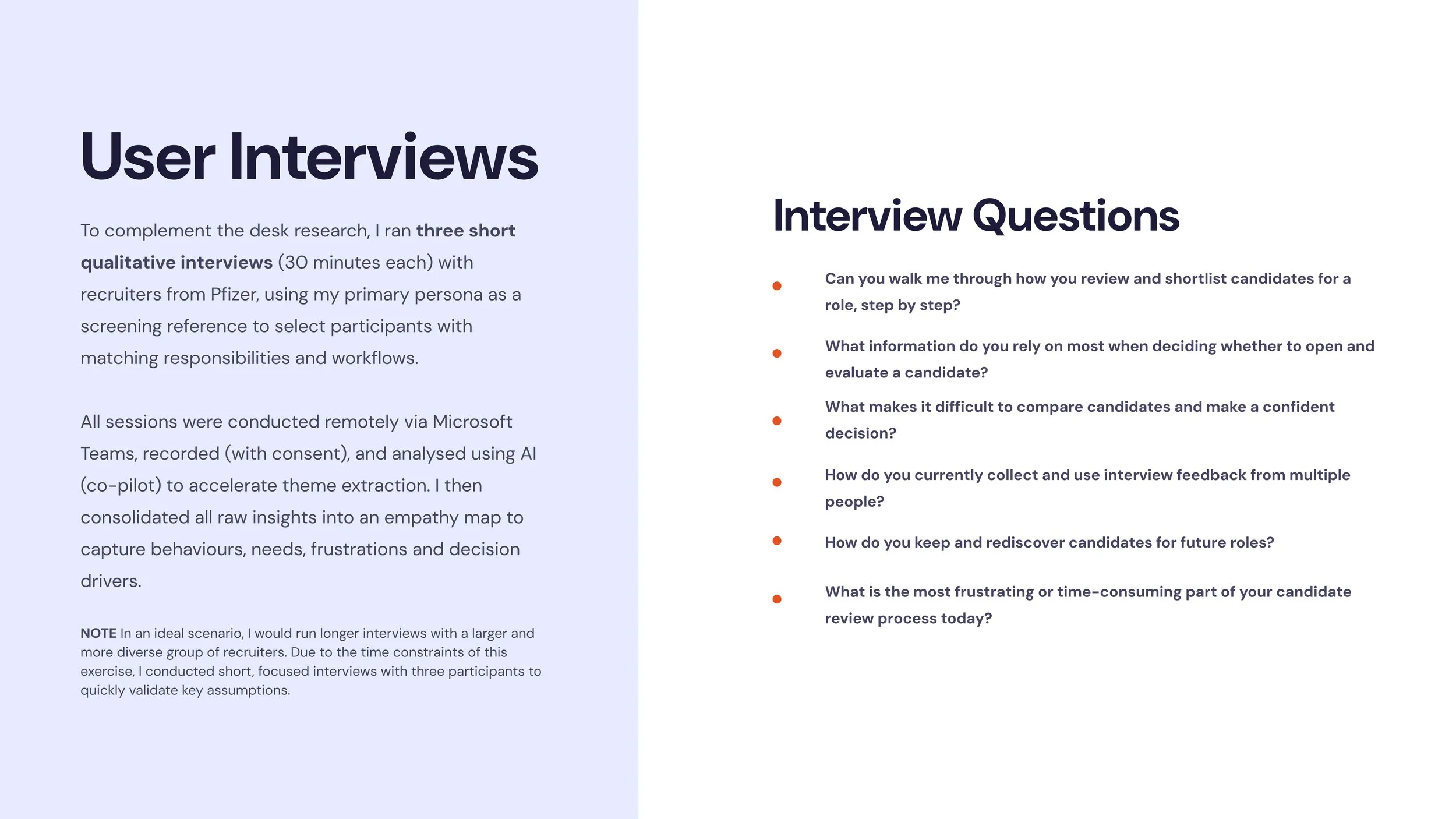
Interviews
Conducted user interviews to understand hiring workflows, decision-making processes, and key pain points. The insights revealed unmet needs, validated assumptions, and directly informed feature definition, user flows, and overall product direction.
DEFINE
Synthesis & Problem Definition
Empathy Map
I created an empathy map to quickly synthesise interview insights and identify recruiters’ key behaviours, needs and pain points that directly inform the design. To accelerate the process, I used Miro AI to organise and cluster the raw notes before refining the empathy map manually. I then conducted a theming exercise to group recurring insights into clear design themes that guided feature prioritisation and design decisions.
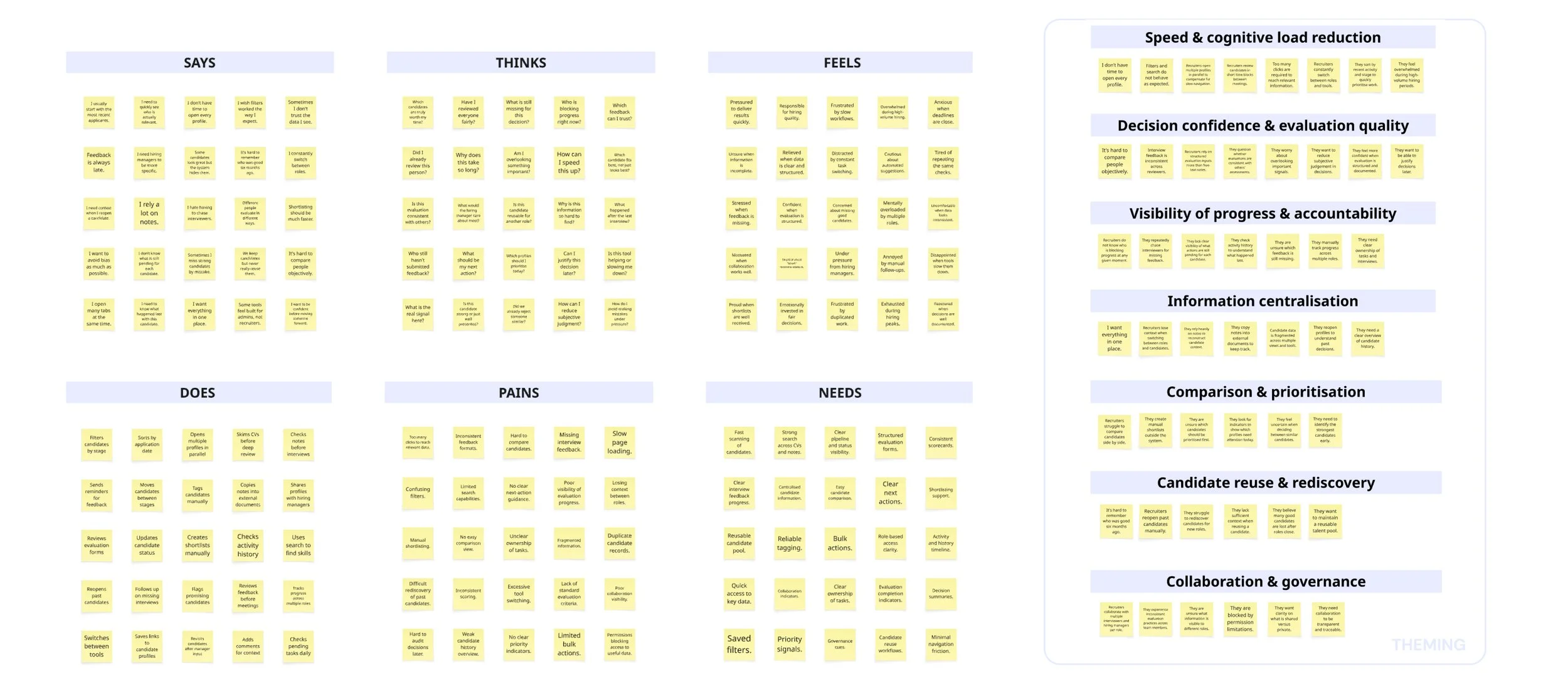
See full exercise here
Problem Definition
I created an empathy map to quickly synthesise interview insights and identify recruiters’ key behaviours, needs and pain points that directly inform the design. To accelerate the process, I used Miro AI to organise and cluster the raw notes before refining the empathy map manually. I then conducted a theming exercise to group recurring insights into clear design themes that guided feature prioritisation and design decisions.
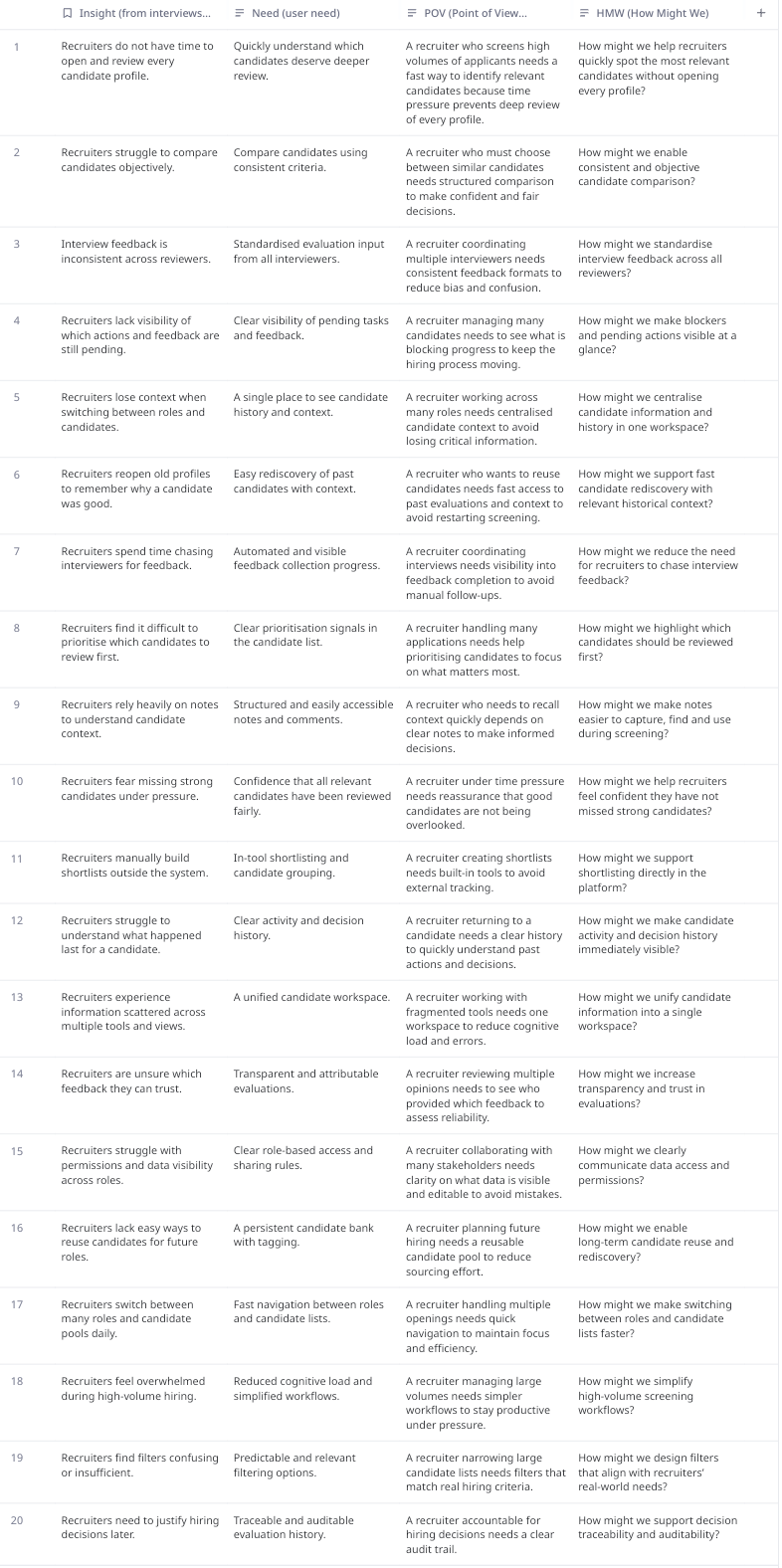
See detailed list here
Ideation
Brainstorming
The purpose of this exercise is to explore the solution space in a structured way before moving into design, ensuring that all features are grounded in validated user insights and clearly defined problems. The HMW framework helped translate research findings into practical design directions for the Candidates List and Candidate Info pages. I plan to incorporate as many of these ideas as possible into the final designs within the scope of this task. Since this is a recruitment exercise, the focus is on user value rather than technical feasibility, as I do not have access to the technical or business teams beyond the initial brief provided.
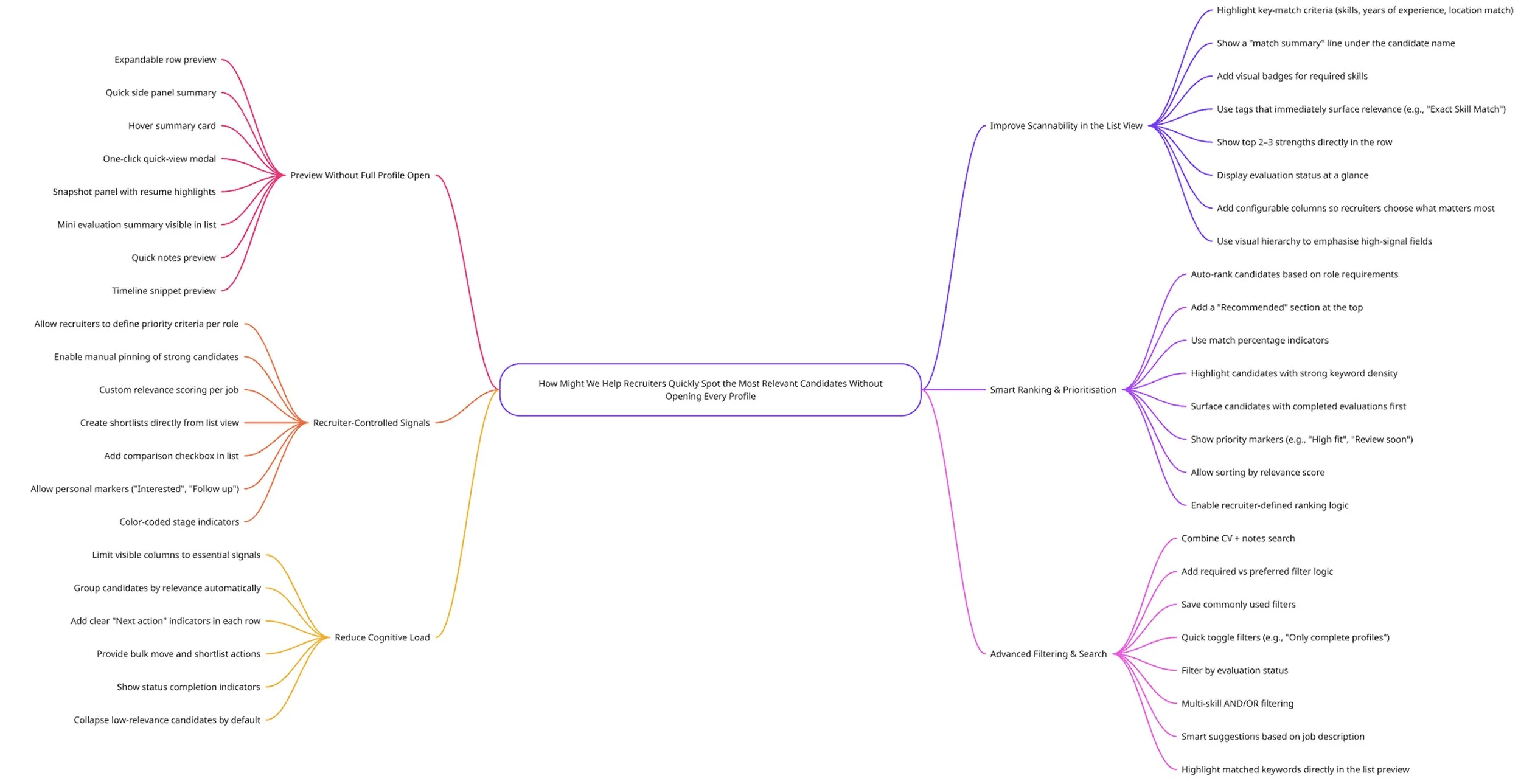
See full exercise here
Feature Prioritisation
The purpose of this exercise is to translate research and brainstorming into a clear, prioritised feature set that directly informs the final designs. It ensures the Candidates List and Candidate Info pages focus on the most critical recruiter needs while staying aligned with the task requirements. Since this is a recruitment exercise, prioritisation is based on user value and the given brief, without factoring in technical constraints or additional business input.
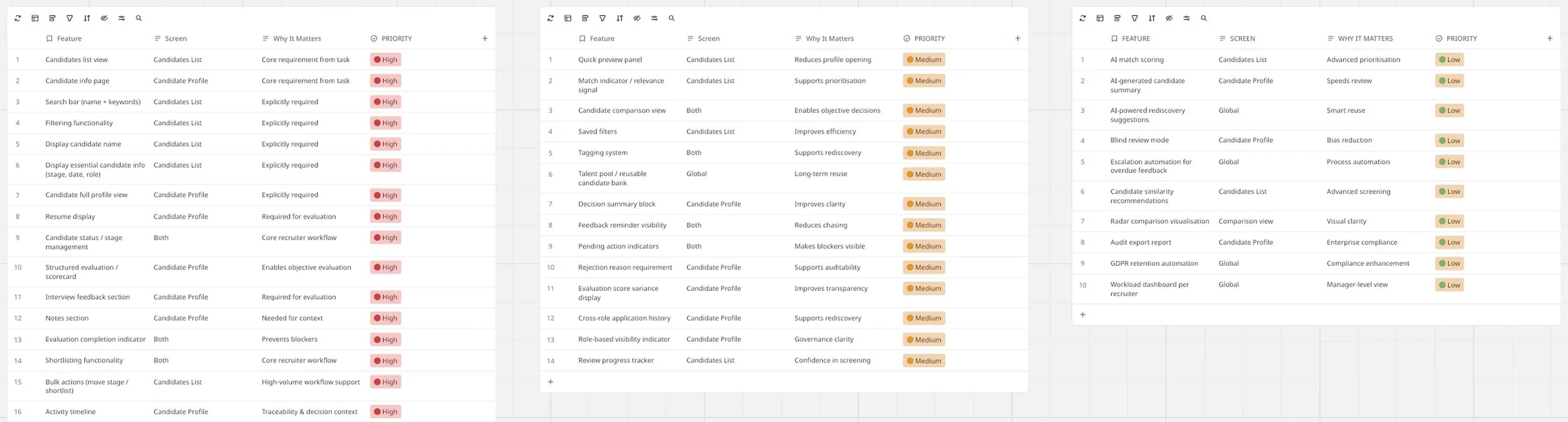
See full list here
Design & Prototype
User Flow
Designed user flows to map the end-to-end journey, ensuring users could easily navigate the platform, access candidate profiles, and complete key tasks efficiently and without friction.

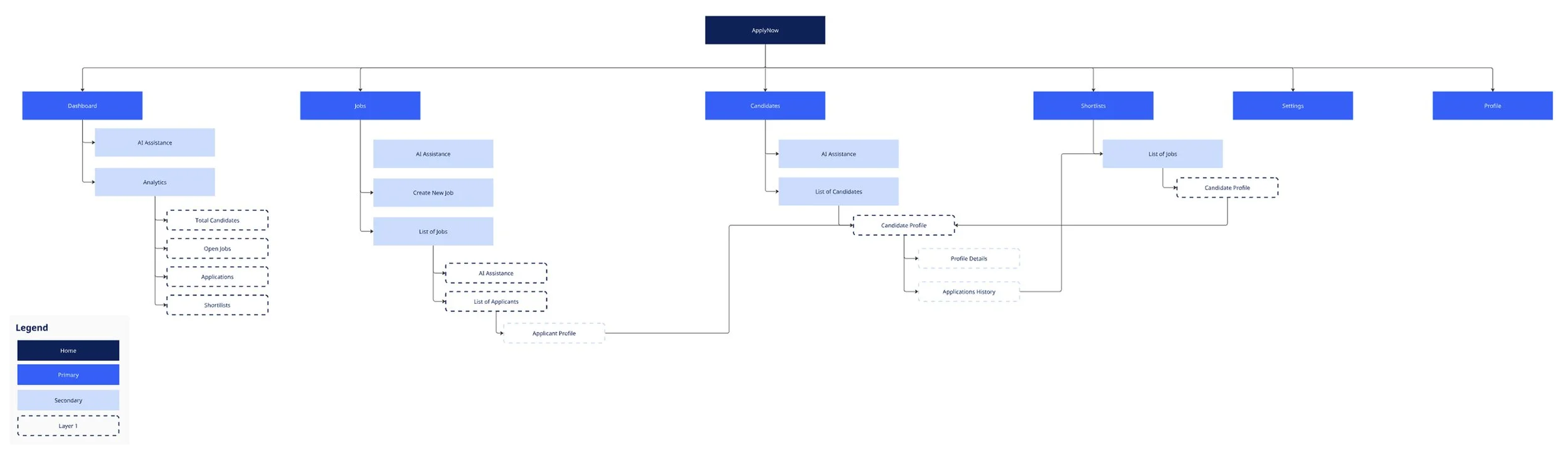
Information Architecture
Based on the research and prioritised features, I defined an information architecture that supports recruiters’ core workflows: reviewing jobs, evaluating applications, and managing candidates long-term. The structure separates Jobs, Applications, Candidates and Shortlists, allowing recruiters to move from role-level overview to detailed evaluation and talent rediscovery. Each section prioritises decision-critical information, evaluation status and next actions, while AI prompts and filters help surface priorities and reduce effort.
Design & Prototype
Over the last week, I designed and built the interactive prototype using an AI-accelerated workflow to move quickly and iterate effectively. I initially created the full experience in Lovable, which allowed me to rapidly define the UX flows and micro-interactions. Once I was satisfied with the experience, I rebuilt everything in Figma, as required for the exercise, and used it to refine the visuals and prepare the final polished prototype. This approach allowed me to balance speed, iteration and final design quality while delivering the complete solution in Figma.
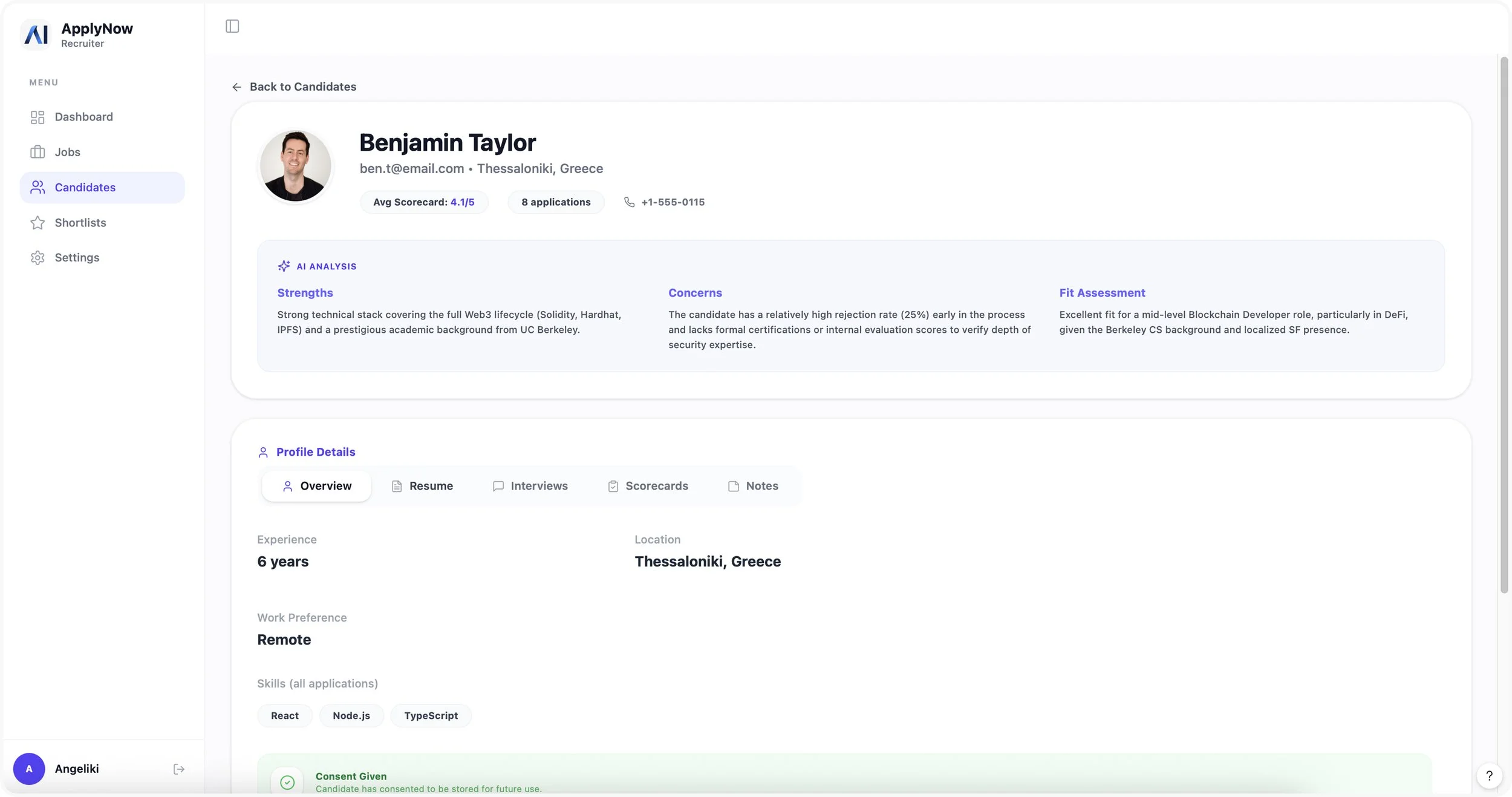
See full interactive prototype in Figma Make and In Lovable
Testing
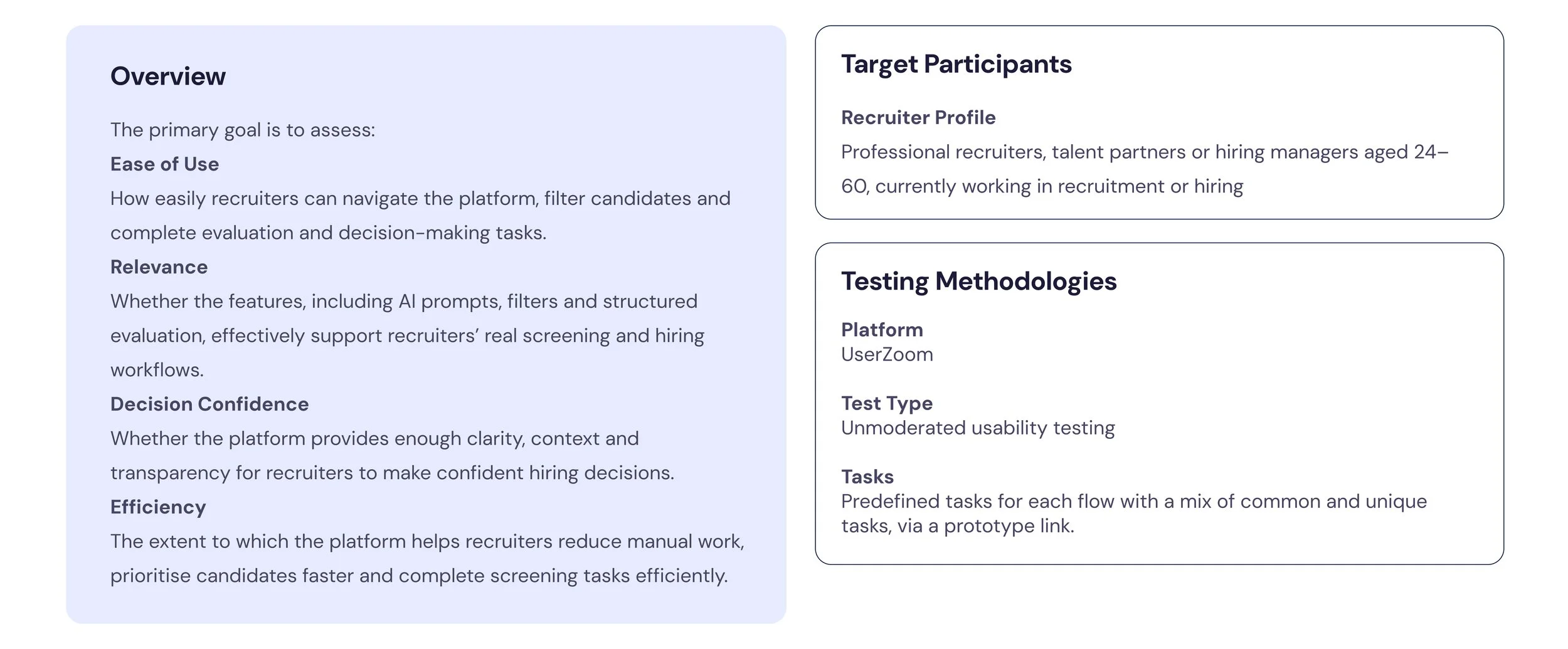
Test Plan
In order to make sure the design decisions effectively help recruiters screen, evaluate and manage candidates efficiently, I would plan to create a detailed test plan to validate the key workflows of the ApplyNow platform and test the core hypotheses behind the Candidates List and Candidate Info experiences. While this testing has not yet been conducted, the following outlines how I would approach evaluating the product to ensure it meets recruiter needs and supports confident, efficient decision-making.
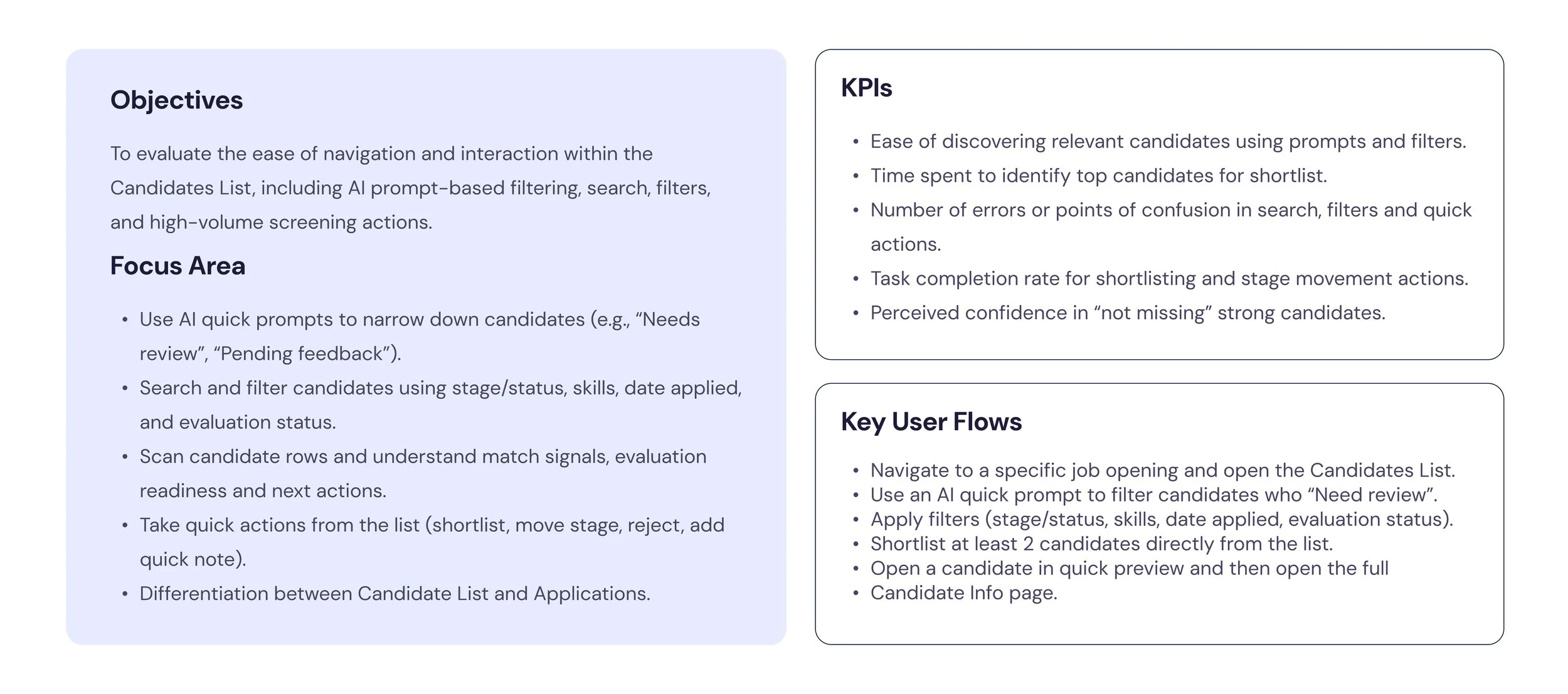
Test Plan: The Candidates List
Test plan focuses on validating the Candidates List as the primary entry point for recruiters to screen applicants for a specific job opening, assessing whether users can quickly find relevant candidates using AI quick prompts, search and filters, understand candidate status at a glance, and take key actions (shortlist, move stage, reject) efficiently without needing to open every profile.
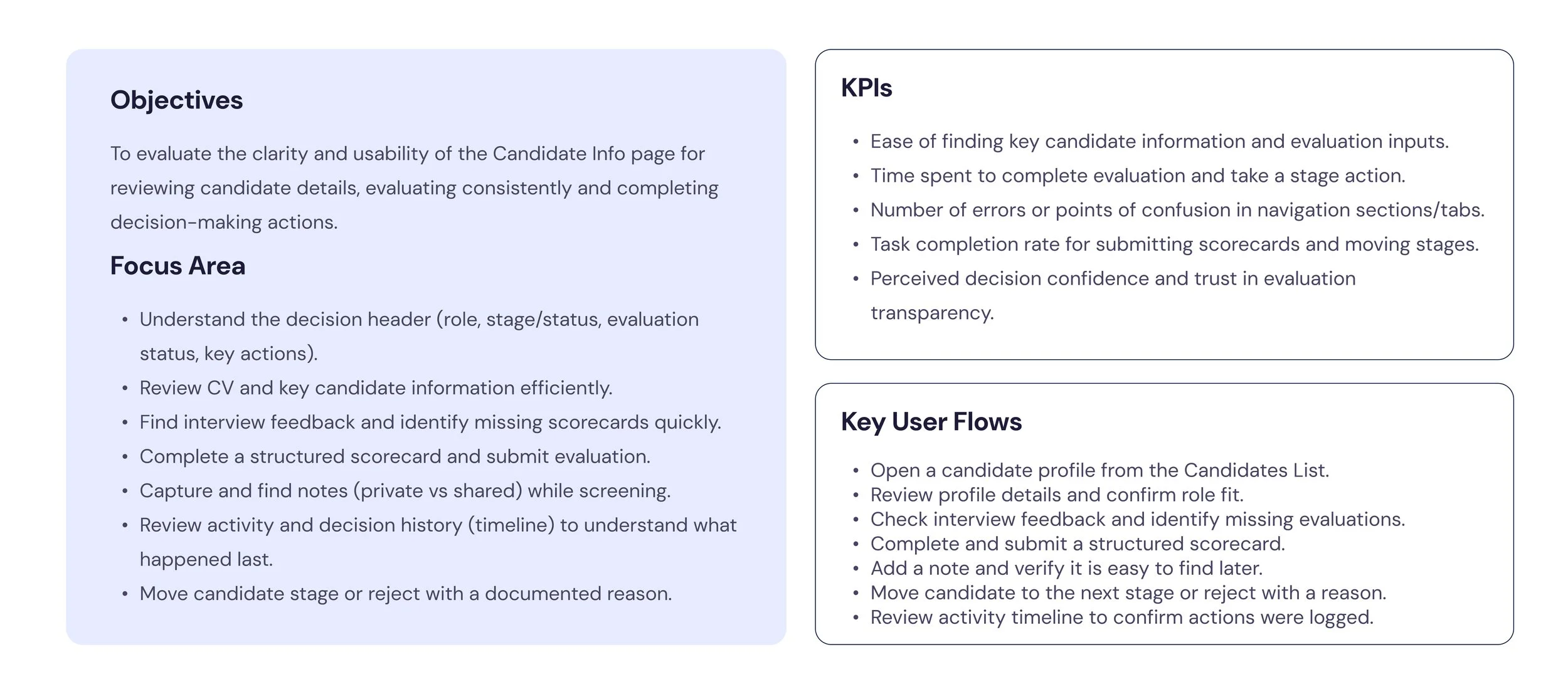
Test Plan: Candidates Info Page
Test plan focuses on validating the Candidate Info page as the single workspace for evaluation and decision-making, assessing whether recruiters can quickly understand a candidate’s full context, review CV and interview feedback, complete structured evaluation, identify blockers (missing feedback), and progress candidates through stages with confidence and traceability.

Reflexion & Next Steps
Reflected on the exercise to evaluate the effectiveness of design decisions, the impact of research on shaping the solution, and the overall product strategy. Identified key learnings around balancing speed and quality, leveraging AI tools to accelerate workflows, and the importance of continuous validation. Highlighted opportunities for further refinement through user testing and iteration to ensure the platform delivers real value and is ready for scalable implementation. If I were to push this project further, I would:
Validate design with users
Conduct usability testing with recruiters to evaluate the effectiveness of AI prompts, filtering, candidate evaluation and decision workflows, and identify usability gaps and improvement opportunities.
Iterate and refine the experience
Incorporate testing feedback to improve clarity, prioritisation signals, evaluation structure and overall workflow efficiency, ensuring the platform supports confident and fast decision-making.Expand AI capabilities
Further explore AI-driven features such as candidate recommendations and intelligent rediscovery to enhance recruiter productivity and reduce manual effort.Align with technical and business stakeholders Collaborate with product, engineering and business teams to validate feasibility, define technical requirements and align the solution with business goals and roadmap priorities.
Prepare for implementation and scaling Define MVP scope, establish design system components and prepare the solution for scalable implementation across multiple roles, teams and hiring workflows.